

Have you ever been driving down a familiar road in Peachtree Corners, maybe heading toward The Forum, and felt your steering wheel give a little tug? Or perhaps your “Lane Keep Assist” starts acting a bit jittery, nudging you when you’re perfectly centered in your lane.
It’s frustrating and, honestly, a little unnerving. You bought a modern car for the safety features, but when those features start acting up, it feels like the car is working against you. Most drivers know they need a wheel alignment every now and then, but there’s a new player in town that is just as critical: ADAS Calibration.
At North Atlanta Automotive, we believe in being 100% honest with our neighbors. The truth is, in an older car, a wheel alignment was a simple mechanical fix. In a modern car, it’s only half the job. If you’re searching for a “wheel alignment near me,” you need to know why ADAS calibration is the invisible partner your car can’t live without.
What is a Wheel Alignment? (The Mechanical Foundation)
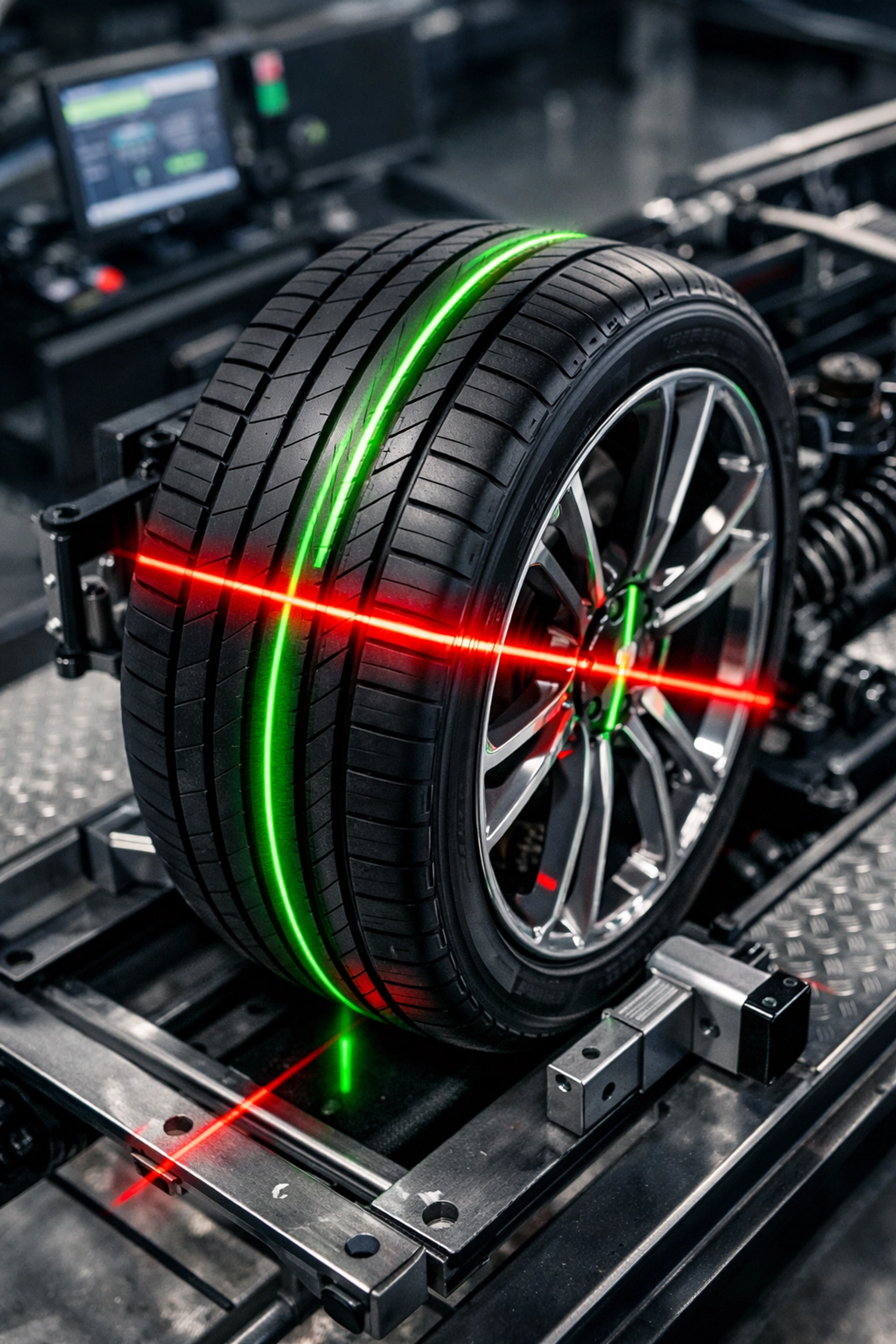
Let’s start with the basics. A wheel alignment is a computerized process where our technicians adjust the mechanical angles of your wheels so they are perfectly parallel to each other and perpendicular to the ground.
When we perform an alignment, we’re looking at three main angles:
- Camber: The inward or outward tilt of the tire when viewed from the front.
- Toe: The extent to which your tires turn inward or outward when viewed from above (like being pigeon-toed).
- Caster: The angle of your steering axis when viewed from the side, which helps with steering balance and stability.
Proper alignment ensures your tires wear evenly and your car doesn’t pull to one side. You can learn more about the impact of tire alignment on your vehicle here. It’s the “boots on the ground” part of your car’s safety and comfort.
What is ADAS Calibration? (The Digital Brain)
Now, let’s talk about the “brain.” ADAS stands for Advanced Driver Assistance Systems. These are the high-tech features that keep you safe, such as:
- Automatic Emergency Braking
- Lane Departure Warning
- Adaptive Cruise Control
- Blind Spot Detection
These systems rely on “eyes”: cameras, radar, and sensors mounted on your windshield, bumpers, and side mirrors. ADAS Calibration is the process of resetting or “teaching” these sensors exactly where they are pointing.
Think of it like this: If your wheel alignment is the car’s “feet,” ADAS is the car’s “vision.” If the vision is blurry or pointing the wrong way, the car is going to make the wrong moves.
Pro Tip: When do you need Calibration?
It’s not just after a wreck! You need ADAS calibration after a windshield replacement, a bumper repair, or: you guessed it: a wheel alignment.
Why They Are Inseparable
This is where things get interesting (and where many shops might not give you the full story). In modern vehicles, your safety systems cannot function properly without a precise alignment. This is because ADAS features depend on a “zero-degree forward reference point.”
Imagine your car’s Lane Keep Assist camera is mounted on the windshield. It is programmed to believe that when the steering wheel is straight, the car is moving directly forward. However, if your wheels are slightly misaligned, the car might actually be tracking a fraction of a degree to the left.
Because the camera doesn’t “know” the wheels are off, it thinks you are drifting out of your lane and will try to “correct” the steering. This creates a dangerous loop where the car fights your steering input. This is why a thorough car diagnostics and inspection is vital for any modern vehicle.

The “3-Minute” Summary: The Key Differences
If you’re in a hurry, here is the breakdown of how these two systems differ and why they both matter:
| Feature | Wheel Alignment | ADAS Calibration |
|---|---|---|
| Focus | Mechanical (Tires/Suspension) | Electronic (Sensors/Cameras) |
| Goal | Straight driving & even tire wear | Accurate safety system response |
| Tools | Alignment rack & laser sensors | Digital targets & specialized software |
| Frequency | Every 6,000 miles or after a big pothole | After alignment, suspension repair, or windshield swap |
| Impact | Saves your tires and fuel | Saves lives by preventing collisions |
The Danger of Skipping Calibration
We get it: car repairs can be stressful and sometimes expensive. You might think, “I just want the wheel alignment; I don’t need the fancy sensor reset.”
But here’s the honest truth from your friends at North Atlanta Automotive: skipping ADAS calibration is a major safety risk. According to research, many ADAS features will malfunction if they aren’t calibrated after the vehicle’s geometry changes.
If your Adaptive Cruise Control radar is off by even one degree, it might be looking at the car in the next lane instead of the car directly in front of you. At 70 mph on I-85, that one-degree error can be the difference between a smooth ride and a collision. This is why brake inspections and overall safety checks are non-negotiable for us.
Did You Know?
Some manufacturers actually require a wheel alignment as a prerequisite step before they even allow the ADAS calibration to begin. You can’t have one without the other!
Static vs. Dynamic Calibration
When you bring your car to a professional shop for diagnostics and inspections services in Peachtree Corners, GA, we might perform two types of calibration:
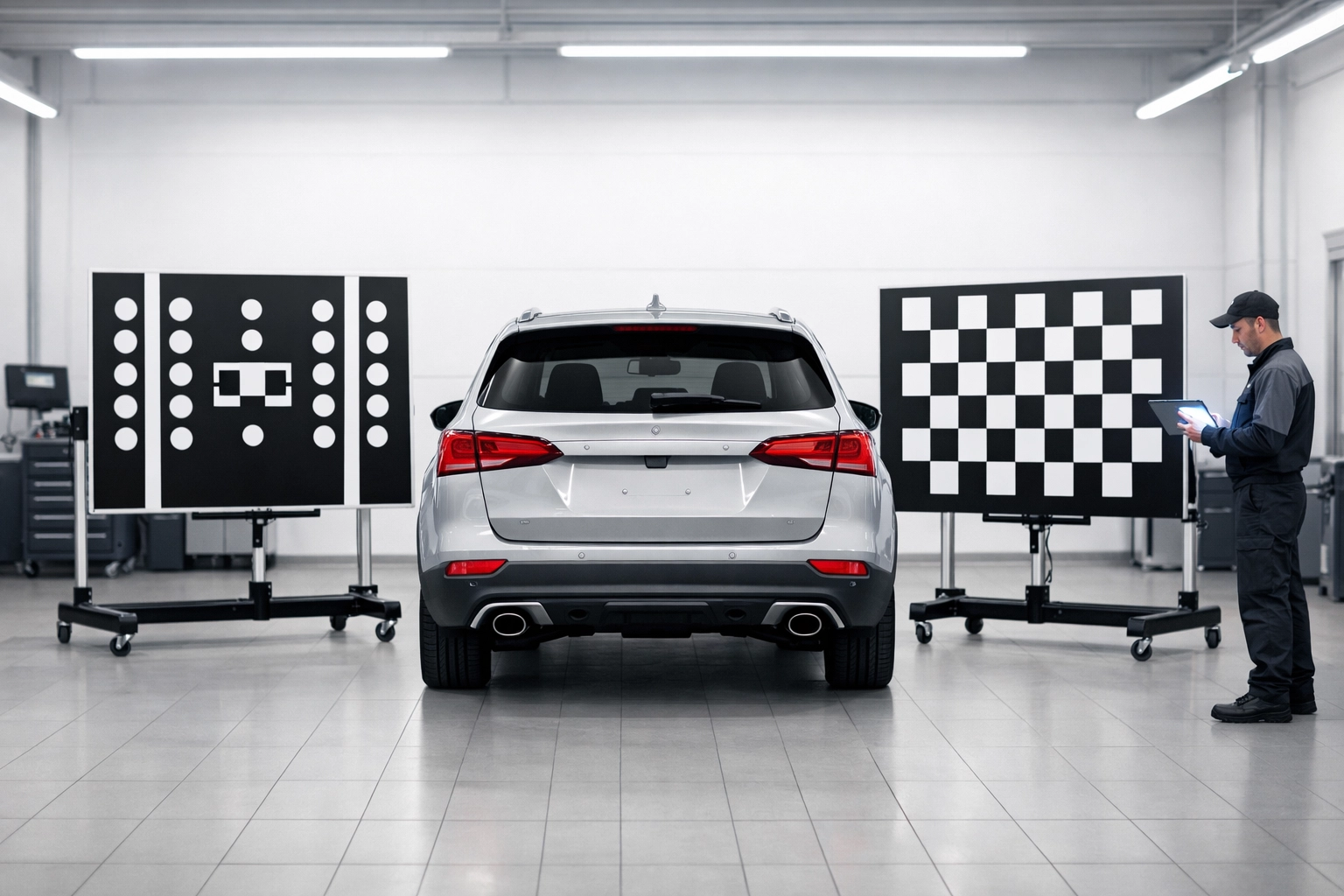
- Static Calibration: We set up specialized physical targets at specific distances and heights around the vehicle in a controlled shop environment. The car’s computer “sees” these targets and recalibrates its internal maps.
- Dynamic Calibration: This involves driving the vehicle at specific speeds on well-marked roads (like some of our flatter stretches around North Atlanta) while the car’s computer monitors road markings and surrounding objects to calibrate itself.
A truly modern “Safety Systems Alignment” often requires a combination of both to ensure your family stays safe on the road.
The North Atlanta Automotive Difference: Honesty First
When you look for a “wheel alignment near me,” you’ll find plenty of shops that will just set the “toe” and send you on your way. At North Atlanta Automotive, we don’t cut corners.
We understand that your car’s suspension system plays a huge role in safety, and we treat every vehicle as if our own family were driving it. Our process is transparent:
- We explain exactly what your car needs (and what it doesn’t).
- We use the latest diagnostic technology to ensure your digital safety systems are perfectly synced with your mechanical parts.
- We provide a clear report of your car diagnostics and inspection so you can see the results for yourself.
Maintaining a modern car shouldn’t be a mystery. Whether you’re preparing for a long road trip or just commuting through Gwinnett County, knowing that your steering, tires, and safety sensors are all working in harmony provides peace of mind that you can’t put a price on.
Take Action for Your Safety
Don’t wait for a warning light or a steering pull to become a dangerous situation. If you’ve recently had suspension work, replaced your windshield, or it’s simply been a while since your last check-up, let us help.
We’re here to be your long-term partners in vehicle health. From regular oil changes to complex ADAS calibrations, we’ve got your back with honest, professional service.
Ready to ensure your car is as safe as it can be? Visit us at North Atlanta Automotive in Peachtree Corners for a comprehensive alignment and safety check today. Let’s keep your modern safety systems working exactly the way they were designed to.